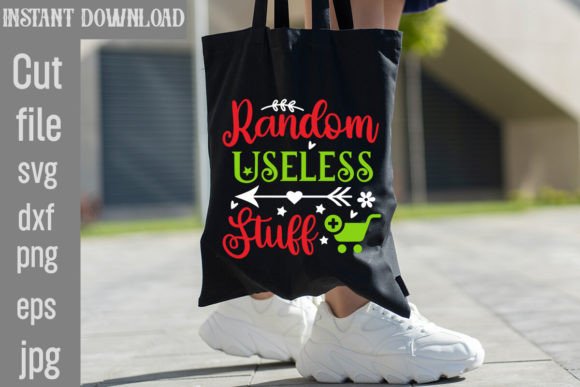
Random Useless Stuff: Graphics for T-Shirt Designs
As a brand designer and content marketer, I am constantly vetting graphic design assets that promise to elevate client campaigns without breaking the budget. Recently, I integrated the Random Useless Stuff SVG Cut File into a real-world marketing project for a lifestyle boutique launching a limited-edition merchandise line. The goal was simple: create eye-catching T-Shirt Designs and social media graphics that felt authentic, playful, and distinct from the polished minimalism saturating the market. This review breaks down how this asset performs in professional branding contexts, focusing on audience perception, visual consistency, and practical application.
First Impressions: Mood and Audience Perception
The immediate impact of the Random Useless Stuff SVG Cut File is its unapologetic whimsy. In an era where modern design often leans toward sterile perfection, this collection offers a refreshing dose of personality. The mood it creates is casual, approachable, and slightly irreverent. For brands targeting Gen Z or millennial audiences who value authenticity over polish, this emotional tone is invaluable. It signals that the brand does not take itself too seriously, fostering a sense of relatability.
However, suitability is key. This asset shines in casual branding, handmade product promotions, and lifestyle content. It feels less appropriate for high-end luxury goods or corporate financial services. When used correctly, it enhances audience trust by humanizing the brand. The illustrations act as conversational starters, encouraging engagement rather than passive scrolling. For a small business owner looking to inject humor into their content marketing strategy, this digital product provides an instant toolkit for memorable visuals.
Performance in Real Marketing Scenarios
Beyond novelty, a graphic design asset must be versatile. I tested the files across multiple channels to evaluate their utility in professional branding. The included formats—SVG, DXF, EPS, and PNG—ensure compatibility with both digital and physical production workflows. For T-Shirt Designs, the vector files allow for infinite scaling without quality loss, crucial for large-format printing. The transparent background PNGs are equally vital for quick social media overlays.
In terms of brand identity, these graphics work exceptionally well as decorative elements. They can accentuate packaging design by adding a playful touch to otherwise plain boxes or tissue paper. For product labels, they serve as unique icons that differentiate items on crowded shelves. In the digital realm, I found them effective for Instagram posts and Pinterest pins, where visual distinctiveness drives clicks. They also function well as hero graphics for blog headers, breaking up text-heavy editorial layouts and improving visual hierarchy.
For email marketing, using these illustrations in banners can increase open rates by signaling a lighter, more engaging tone. They are also ideal for creating custom stickers or digital badges for lead magnets, enhancing the perceived value of free resources. Whether you are building a Canva template kit for clients or designing digital ads, the flexibility of this design bundle supports a wide range of creative needs.
Strategic Application: Where It Works Best
To maximize ROI, place the Random Useless Stuff SVG Cut File where it can drive attention without competing with core messaging. It excels as a campaign header element, drawing the eye before the user reads the copy. In social media graphics, use it to frame quotes or highlight key statistics, making dry data feel more accessible. For event promotions, these graphics add energy to flyers and posters, creating a festive atmosphere even in static images.
It is particularly strong in merchandise creation. Beyond t-shirts, consider applying these designs to tote bags, mugs, or phone cases. The "useless" theme ironically becomes a selling point for novelty gifts, tapping into the impulse buy market. In web design, these assets can serve as custom 404 page illustrations or loading animations, turning frustrating moments into brand-building opportunities. The key is to use them as accents that reinforce the brand’s voice, not as the sole focus of complex informational layouts.
Cautions and Limitations for Professional Use
While versatile, this asset requires careful handling. Avoid using it in formal corporate branding where seriousness is paramount. In dense information layouts, such as technical whitepapers or legal documents, the playful nature of the graphics can undermine credibility. Similarly, be cautious when using these elements in small mobile graphics; intricate details may become muddy at reduced sizes, affecting readability.
Low-contrast backgrounds can also diminish the impact of the clipart and illustration elements. Ensure sufficient contrast between the graphic and the background color to maintain visibility. For overly minimal brands, introducing such busy or quirky elements might disrupt the established aesthetic harmony. Always ensure the asset does not compete with the main message or call-to-action. In text-heavy ads, keep the graphics subtle to avoid visual clutter.
Practical Brand Designer Notes
Before deploying the Random Useless Stuff SVG Cut File in a paid campaign, conduct thorough testing. Start by integrating the graphics with your existing brand color palette. While the default colors may be vibrant, recoloring them to match your brand guidelines ensures consistent branding. Test black and white usage to verify that the shapes remain recognizable without color reliance, which is essential for cost-effective single-color printing.
Place the assets inside real campaign mockups to gauge scale and proportion. Preview them on mobile screens, as most social media consumption happens on smaller devices. Check readability if the graphics include any text elements, though this set is primarily illustrative. Compare the visuals against competitor assets to ensure differentiation. Experiment with typography pairings; these graphics often pair well with bold sans serif fonts for a modern look, or handwritten fonts for a personal touch. Avoid overly ornate script fonts that might clash with the playful simplicity of the illustrations.
Review spacing and balance carefully. Whitespace is crucial to let these quirky elements breathe. Finally, confirm the commercial licensing terms. Since this is a DIGITAL DOWNLOAD ONLY package containing SVG, DXF, EPS, and PNG files, ensure your intended use aligns with the license, especially for client work or large-scale commercial design projects. Proper attribution or license verification protects your business and maintains professional branding standards.
In conclusion, the Random Useless Stuff SVG Cut File is a potent tool for brands seeking to inject personality into their marketing visuals. When used strategically, it enhances engagement, supports small business branding, and creates memorable content marketing pieces. By respecting its limitations and leveraging its versatility, designers and marketers can transform simple graphics into powerful brand assets.